
August 2026 Bank of Korea Rate Hike, Explained
On August 27, 2026, the Bank of Korea's Monetary Policy Board raised the Base Rate from 2.75% to 3.00%. The keyword is "preemption."
Introduction
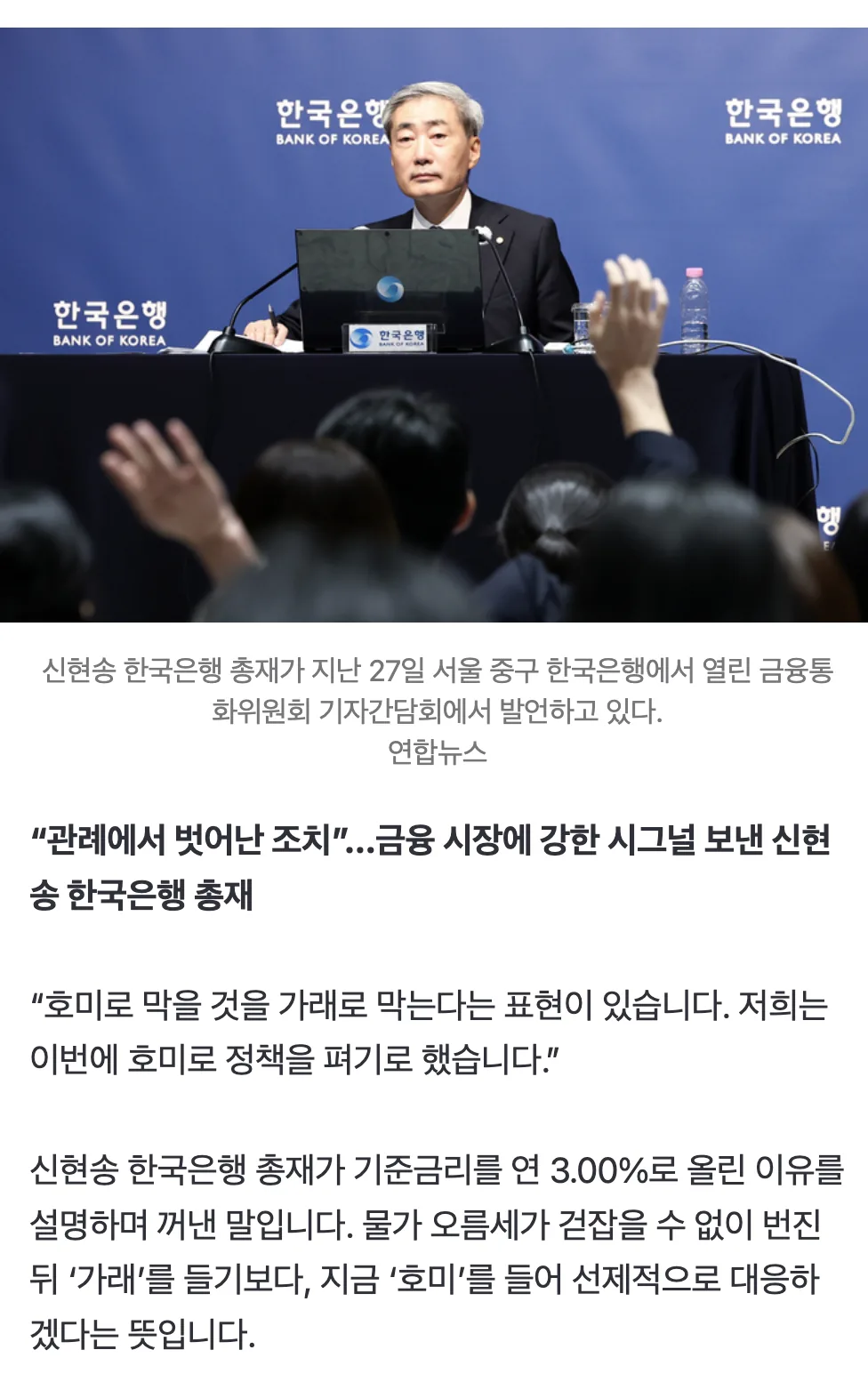
On August 27, 2026, the Bank of Korea's Monetary Policy Board raised the Base Rate from 2.75% to 3.00%, a 0.25-percentage-point increase. It was a second hike in as many months, following July's move — the first back-to-back increases in three years and seven months, since the run of seven straight hikes that lasted from April 2022 to January 2023. Six of the seven Board members voted for the hike, with Hwang Kun-il dissenting in favor of a hold.
Markets did not see it coming. In a Korea Financial Investment Association survey taken two days before the meeting, 79.0% of bond-market participants expected a hold, and KRED's own August call was a hold as well. The Bank of Korea hiked anyway. At the press conference, Governor Hyun Song Shin explained why.
"(A preemptive monetary-policy response) stabilizes inflation expectations sooner, reduces the intensity of tightening, and eases the burden on growth — that is what the great majority of research finds."
He went on to quote the Korean proverb that what could have been stopped with a hoe ends up requiring a spade, adding that this time, the Bank had acted with the hoe. Governor Shin himself conceded that a second consecutive hike was "quite a departure from convention". In this piece, we walk through the logic of preemption the Governor described, starting from the concept of inflation expectations.
What Inflation Expectations Are
Inflation expectations are the outlook that firms, consumers, and other economic agents hold for how much prices will rise. When this number runs high, it feeds into wage demands and product prices, setting off a vicious cycle that stokes actual inflation.
In other words, the expectation of inflation itself creates inflation. If a restaurant owner expects prices to rise 4% next year, menu prices go up in advance, and workers demand raises of 4% or more. Nothing has happened yet, and prices are already being set by expectation alone.
Economists call the state in which this number stays pinned near the target 'anchored' expectations. As long as the anchor holds, even if an oil shock briefly pushes headline inflation to 3%, firms and households do not rewrite their price tags, and inflation comes back down on its own. When the anchor slips, by contrast, the central bank has to raise rates much higher for much longer, and along the way investment shrinks and jobs are lost.
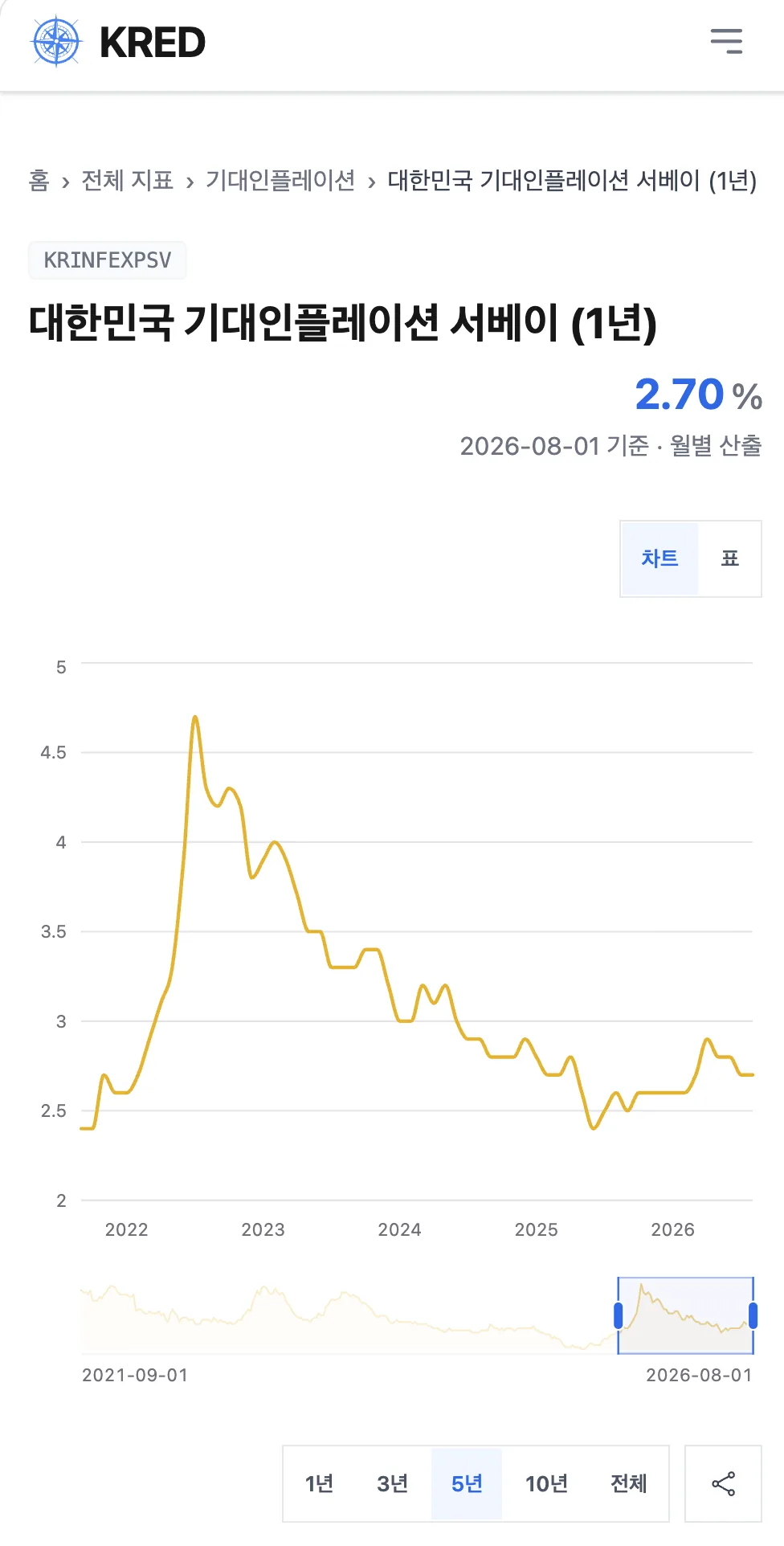
https://kred.dev/en/series/KRINFEXPSV
Korea's inflation expectations have been falling since forming a near-term peak in April 2026,
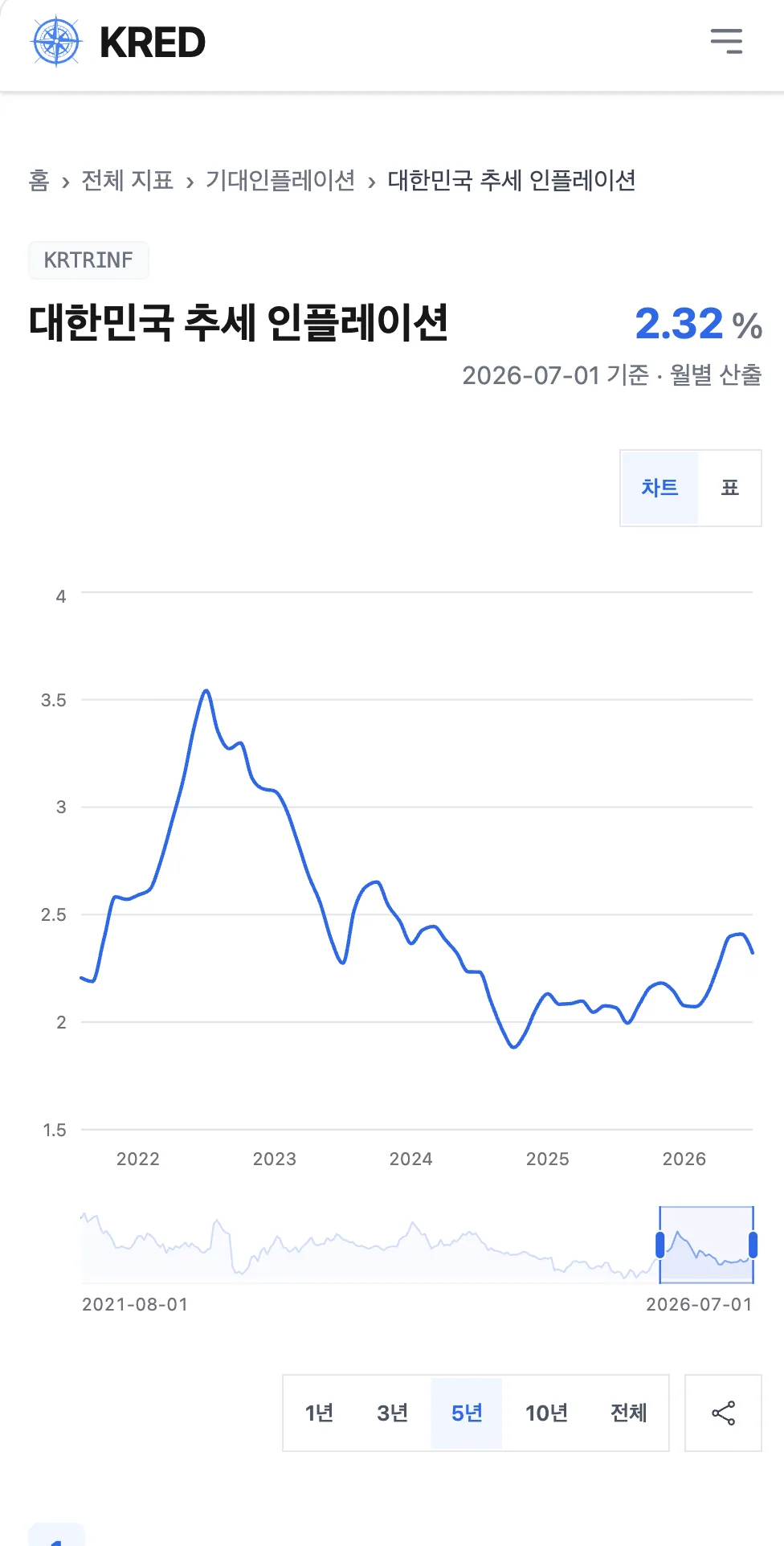
https://kred.dev/en/series/KRTRINF
and trend inflation, too, has been declining since it printed 2.41% in June 2026.
In short, the anchor is still holding. And here lies the paradox of this decision. Rates were raised while the inflation gauges were coming down. By the logic of preemption, defending the current downtrend costs less than clawing it back after a rebound.
That is precisely the definition of preemption. By the time the numbers have turned higher, it is already too late to move — that is Governor Shin's judgment.
Defend the Disinflation Trend
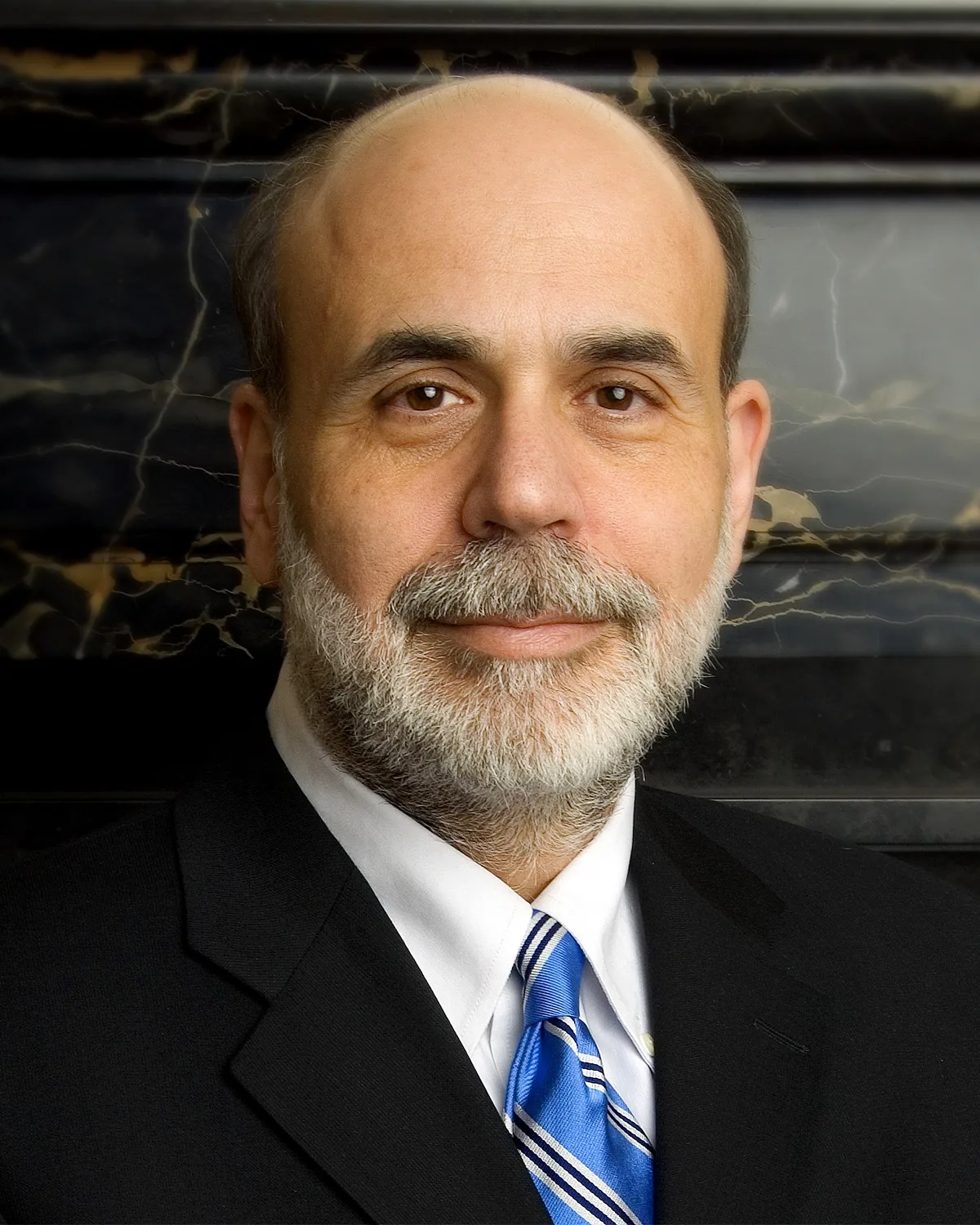
Trace the lineage of the "great majority of research" the Governor cited, and you arrive at former Fed Chair Ben Bernanke.
In "Inflation Targeting: Lessons from the International Experience" (1999), Bernanke argued that when a central bank publicly nails down an inflation target and keeps that promise, inflation expectations become anchored to it, and inflation can be brought under control with far less pain. In his 2004 "Great Moderation" speech, he attributed the decline in US economic volatility since the 1980s to the management of expectations, and in 2012 he formally codified the Fed's 2% inflation target.
In 2023, Bernanke and Olivier Blanchard, the French economist famous for his "Macroeconomics" textbook, published a paper analyzing post-pandemic US inflation. Their conclusion was that while expectations remain anchored the cost of containing inflation is very low, but the moment the anchor slips the cost rises not gently but steeply.
The key point is that the cost is not linear. Delay the response and the cost does not grow in proportion to the delay — past a certain point, it jumps severalfold. If so, then — as the Korean saying has it that a beating you cannot avoid is better taken first — if rates must rise anyway, raising them early leaves the economy with less total pain to bear.
Economics even has a yardstick for this: the sacrifice ratio, the amount of output that must be given up to bring inflation down by one percentage point. The better anchored expectations are, the lower it goes. When Governor Shin spoke of "reducing the intensity of tightening and easing the burden on growth," he meant lowering the sacrifice ratio.
Bernanke's Preemption in Action
Turn the clock back and examine the deflation threat that followed the Lehman crisis of 2008, and you find that Bernanke's preemption effectively pulled the United States out of the pit of recession.
On January 22, 2008, as the US housing-market collapse that had begun in 2007 deepened, Bernanke called an unscheduled emergency FOMC meeting and cut the policy rate by 0.75 percentage points, and followed with another 0.5-percentage-point cut at the regular meeting eight days later. After the Lehman collapse, he held rates at zero while launching quantitative easing (QE).
The mechanism of QE is to compress the term premium embedded in bond yields. The term premium here is the extra compensation investors demand for holding long-term bonds. When a central bank buys long-term government bonds in bulk, fewer of them circulate in the market, and long-term rates naturally fall. With the policy rate already at 0% and nowhere lower to go, it was a workaround — a way to pull long-term rates down directly.
As long-term rates fell, mortgage and corporate-bond rates followed, investment and asset prices revived, and the economy began to regain momentum. As a result, the United States was the first major advanced economy to escape the deflation threat and return to its growth trajectory. Unemployment, which had spiked to 10%, fell steadily, and the Fed ended its asset purchases in 2014 and then in December 2015 became the first major central bank to raise rates.
The very year Europe was just beginning asset purchases to prop up its economy, the United States was already on its growth track, walking toward the exit.
Belated Responses After Lehman
Just how exceptional Bernanke's initial response was becomes plain when set against the other central banks of the same period. In April and July 2011, the European Central Bank (ECB) actually raised rates twice in the middle of the sovereign-debt crisis, only to reverse them soon after. Its asset-purchase program, the counterpart to QE, did not begin until March 2015. That was six years behind the Fed. The Bank of Japan's quantitative and qualitative easing, likewise, dates to April 2013.
The price came back as inflation stuck below the central banks' targets. The euro area and Japan spent a decade under the threat of deflation, and in September 2019 the ECB had to reverse course, cutting its negative rate further and restarting asset purchases.
Outside the United States, economies cooled one after another. In 2014, China declared the 'New Normal' (xinchangtai) — the new state of a Chinese economy giving up high-speed growth in pursuit of stable, quality-focused growth. In 2015 its growth rate fell to 6.9%, below 7% for the first time since 1990, and in 2018 its auto sales declined for the first time in nearly three decades.
Germany began to wobble in the second half of 2018. Growth slowed from 2.5% in 2017 to 1.5% in 2018 and 0.6% in 2019, and the third quarter of 2018 printed -0.2%, one step short of a technical recession. What crumbled was not consumption but manufacturing. German industrial production fell 3.6% in 2019, with autos leading the decline.
Nor was Korea an exception to the low inflation. In September 2019, consumer price inflation came in at -0.4%, the first official negative reading since the statistics began in 1965. The annual rate, 0.4%, was the lowest on record, and core inflation, at 0.6%, was the weakest since September 1999.
From 2018 through 2019, a world floundering in deflation had its eyes fixed on one thing only, the next reading on American consumer demand. Through that stretch, the US stock market — tech above all — powered higher, and even the United States had to prop up its economy with three insurance cuts in 2019.
A Belated Response to COVID
And so 2020 arrived. This time, Korea was among the first countries to encounter COVID. The first confirmed case, an arrival from Wuhan, came on January 20, 2020; starting with patient 31 in Daegu on February 18, cluster infections spread until cumulative cases in Daegu and North Gyeongsang swelled to roughly 8,000 within a month. At that point, Korea's cumulative case count was second in the world, behind only China, where the virus originated.
Even so, the Bank of Korea held the Base Rate at 1.25% at its regular Monetary Policy Board meeting on February 27. In the Reuters poll at the time, 16 of 26 analysts expected a preemptive cut, but the Bank chose to hold on the premise that the outbreak would peak in March and subside. The same day, it lowered its growth forecast for the year from 2.3% to 2.1%. It cut the forecast while leaving the rate untouched.
The Fed moved the other way. On March 4 (KST), it urgently convened an unscheduled meeting and cut 0.5 percentage points. It was the first emergency cut since the 2008 financial crisis. On Sunday, March 15 (local time), it cut a further 1.0 percentage point, taking its policy rate back to the zero range of 0–0.25%, and announced the restart of QE at a scale of $700 billion — $500 billion of Treasuries and $200 billion of mortgage-backed securities.
It was the largest single action in the Fed's history, and across two emergency meetings the Fed had cut 1.5 percentage points in just two weeks. As of that day, the United States had 61 COVID deaths. The country with the world's second-largest cumulative caseload held, while the country with 61 deaths deployed zero rates and QE at once.
Only then did the Bank of Korea move. Hours after the Fed's second cut, at 4:30 p.m. on March 16, it convened an emergency Monetary Policy Board meeting and cut the Base Rate from 1.25% to 0.75%, a 0.5-percentage-point move and its first emergency cut since the 2008 financial crisis. Then-Governor Lee Ju-yeol explained that the Fed's cut had given the Bank of Korea room to move. The same day, falling prices tripped circuit breakers on both the KOSPI and the KOSDAQ, briefly halting trading.
The hoe the Bank of Korea had spared came back as a spade. On March 19, it signed a $60 billion currency swap with the United States; a 20-trillion-won bond-market stabilization fund was reactivated; and it went as far as unlimited purchases of repurchase agreements (RPs). In May, it cut the Base Rate again, to a record-low 0.5%. Korea's growth in 2020 was -0.7%, and consumer price inflation was 0.5%.
It knew first, and moved second.
The recoveries, too, ran at different speeds.
The US economy grew 5.7% in 2021, its best year since 1984. Consumption led the recovery. US consumer spending rose 7.9% in 2021, the largest increase since 1946. The jobs recovery was more dramatic still. After the financial crisis, it took six years for unemployment to fall from 10% to 5%; this time, the rate that had spiked in April 2020 to 14.7%, the highest in modern history, came down to 3.9% by the end of 2021 — in less than two years.
Korea's 2020 contraction (-0.7%) was far smaller than America's (-3.4%) — an achievement of its disease control. Growth in 2021, at 4.0%, was also the best in the 11 years since 2010. But the composition of the recovery was different. Korea's growth was led by exports, while private consumption fell 5.0% in 2020 and managed only a 3.6% rebound in 2021, still below its pre-COVID level at the end of 2021.
Americans were spending with abandon; Koreans had yet to fully open their wallets.
How Markets Reacted
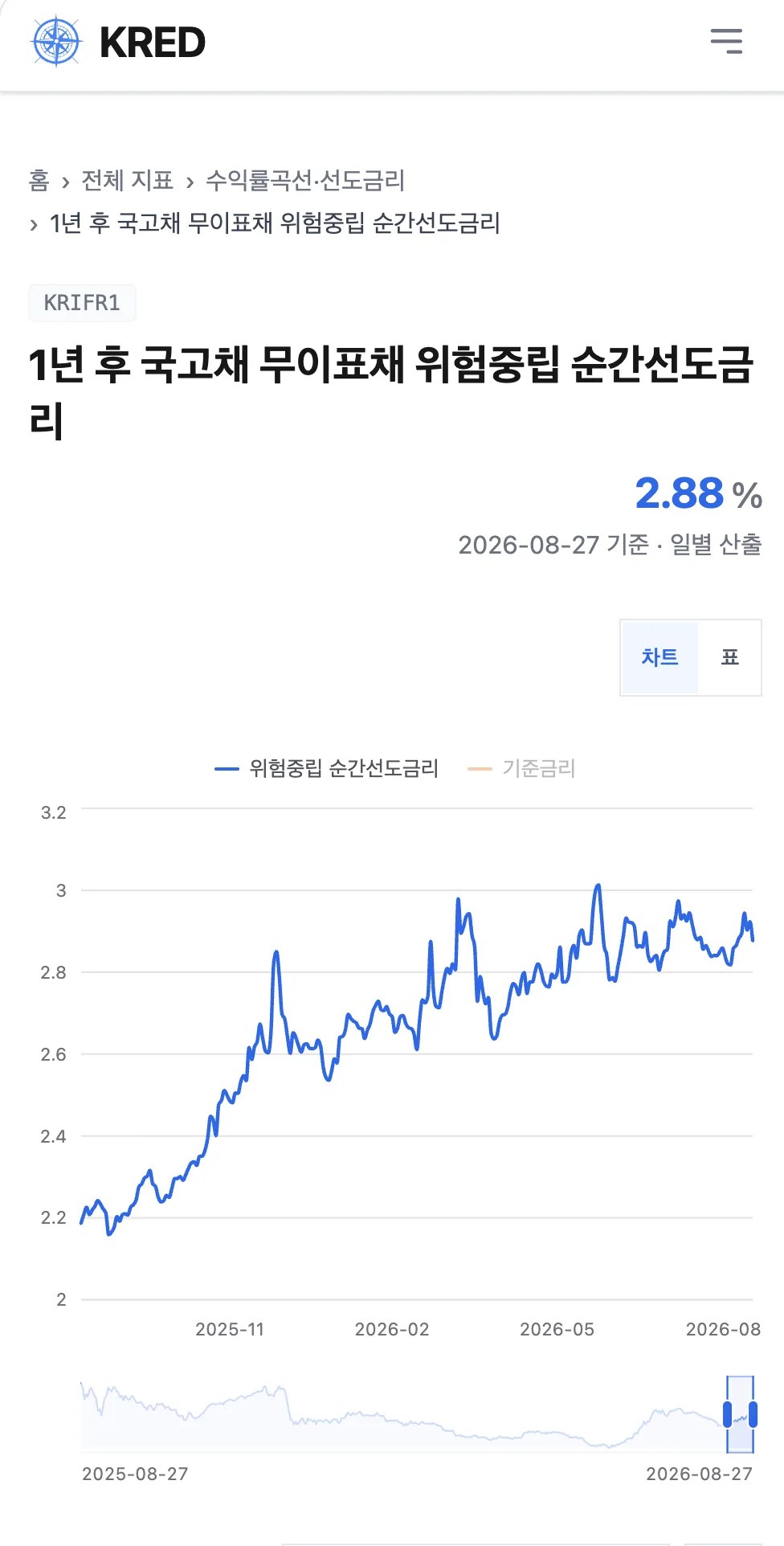
https://kred.dev/en/series/KRIFR1
As of August 24, the Base Rate the KTB market priced in one year ahead was 2.94%. A level the market thought was a year away, the Bank of Korea reached in three days. The signal was sent not through the size of the hike but through its speed.
The next variable for Korea's Base Rate is the United States. At Jackson Hole, Fed Chair Kevin Warsh said the inflation data had become "more worrying," and that he needed "confidence that underlying inflation is moving toward the target at a sufficient pace." The probability of a September Fed hike, per the Chicago Mercantile Exchange's FedWatch, has jumped to 57% from 39.9% a month earlier. If the Fed moves to hike, the burden of the Korea–US rate differential grows again.
Conclusion
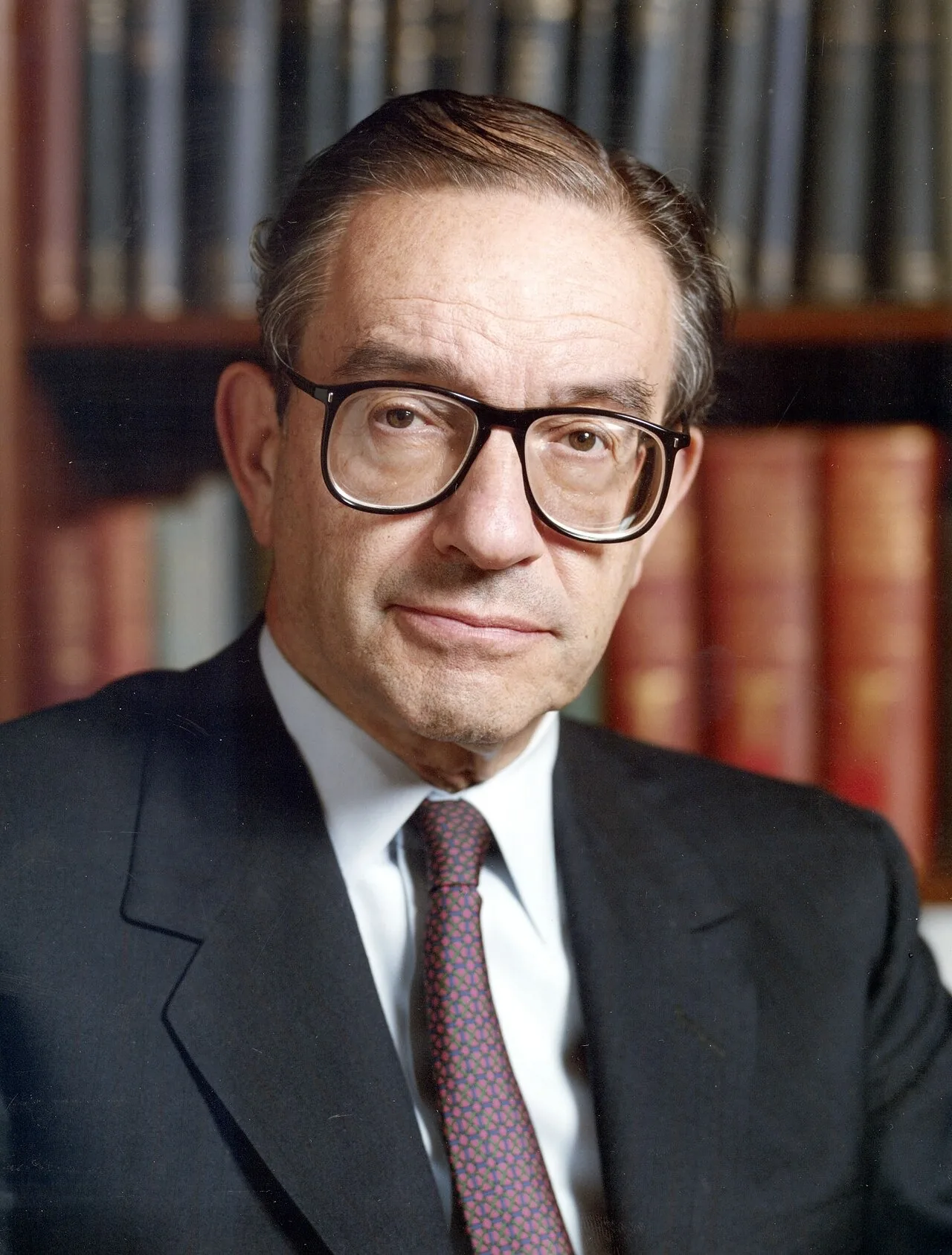
Personally, I think of former Governor Rhee Chang-yong as Korea's Greenspan. No Bank of Korea governor tried to communicate with markets as much as he did. Having the central bank lay out its outlook for the economy and signal the direction of monetary policy and the Base Rate in advance is what forward guidance means, and the first to introduce it were Greenspan and Rhee Chang-yong.
The FOMC began issuing post-meeting statements in February 1994, put the target rate into the statement in July 1995, and in August 2003 delivered the first explicit forward guidance with the phrase that policy accommodation could be maintained for a "considerable period." The person who proposed that sentence was Greenspan himself.
Rhee Chang-yong did the same work as Greenspan. In October 2022, he made public the Board members' conditional three-month rate outlook; in February 2026, the horizon was extended to six months and the format reorganized into a Korean-style dot plot in which each of the seven members places three dots. Analyses since have found that the volatility of short-term market rates on Board meeting days shrank significantly.
Governor Hyun Song Shin, in turn, is Korea's Bernanke, one could say. What defined Bernanke was the initial response — acting preemptively while others wanted to wait for more data. While the ECB and the Bank of Japan hesitated, he called emergency meetings and pushed through QE, and that difference produced the decade of divergence that followed.
With most of the market expecting a hold, Governor Shin hiked for a second straight month knowing it broke with convention. In doing so, the Bank of Korea overcame the misstep of March 2020, of knowing first and moving second.
I have no doubt that Hyun Song Shin, Korea's Bernanke, will rein in sticky inflation early and steer the country toward a Goldilocks economy of low inflation and high growth.